

To lead men in recovery toward lifelong freedom through life skills education, relationship restoration, and a relationship with Jesus Christ.
What the journey of the Magi teaches us about knowledge, wisdom, sacrifice, and the pursuit of God.
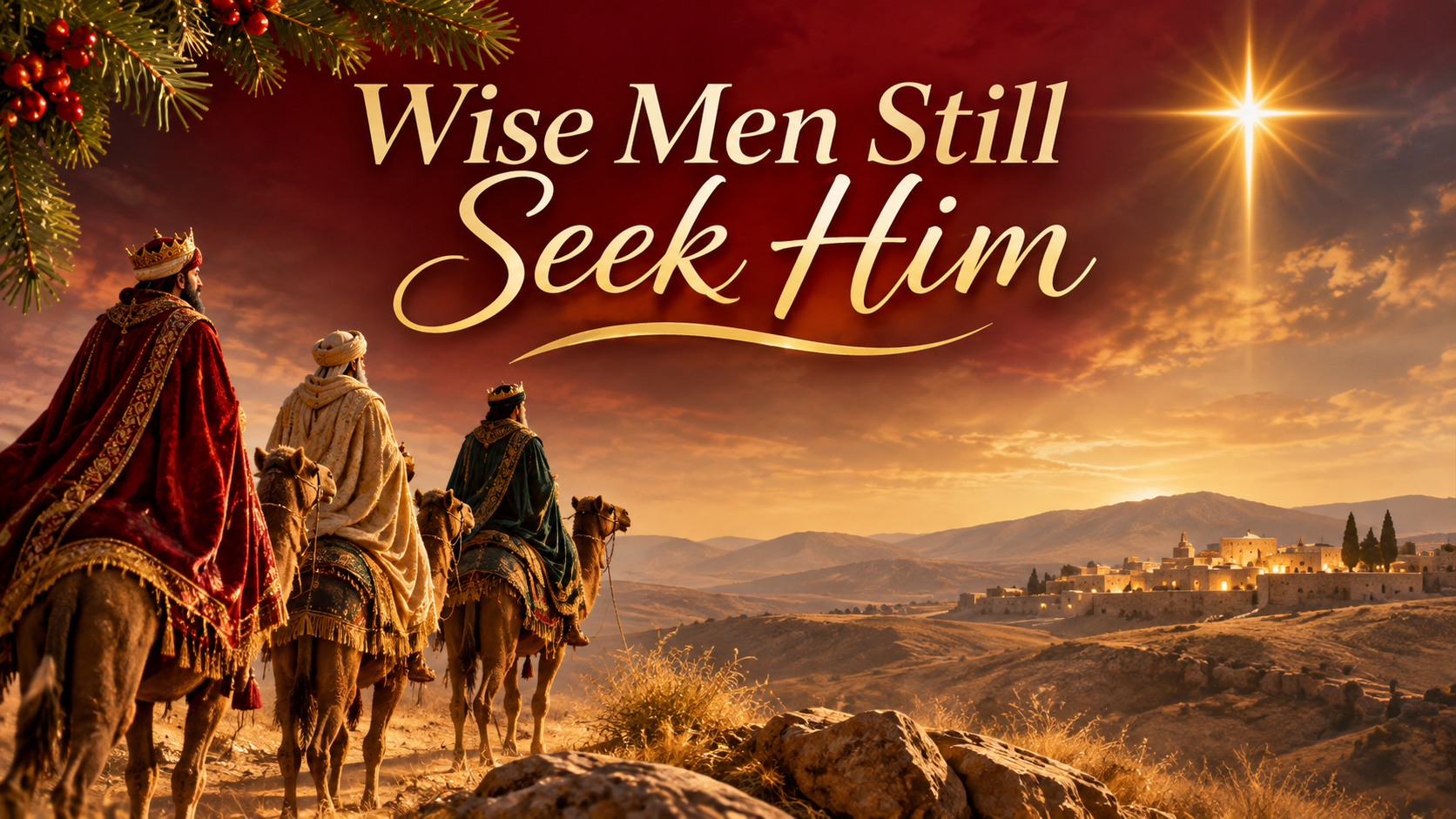
The wise men traveled from afar, following a star in search of a King.
They left behind familiar surroundings, undertook a considerable journey, and brought valuable treasures to honor a child they had never met.
More than two thousand years later, their story continues to intrigue us. Who were these men? How did they recognize the significance of the star? What compelled them to leave their homes and travel such a distance?
Perhaps an even more important question is this: Would we be willing to make such a sacrifice to seek God?
Who Were the Wise Men?
The wise men, referred to as Magi in Scripture, appear in Matthew 2:1–12. The biblical account is relatively brief, leaving many details to historical research and Christian tradition.
The Greek word magoi was historically associated with learned men, priests, astrologers, dream interpreters, and advisers in ancient Eastern societies, particularly those associated with Persia and Babylonia.
Although Scripture does not identify their homeland, they may have traveled from Persia, Babylon, Arabia, or another region east of Judea.
They were likely knowledgeable men with access to considerable resources. Their ability to undertake a lengthy journey and present valuable gifts suggests that they were not without means.
They observed the heavens and recognized something significant enough to pursue.
Some scholars have wondered whether they were familiar with ancient Jewish prophecies, perhaps through the influence of Daniel or Jewish communities that had settled in Babylon during the exile.
Numbers 24:17 speaks of a star coming out of Jacob. Could the Magi have known this prophecy? Scripture does not tell us, but the possibility is intriguing.
What we do know is that these men were searching for someone extraordinary.
They Were Not Afraid to Ask Questions
When the Magi arrived in Jerusalem, they began asking where they could find the newborn King of the Jews.
Their arrival and questions disturbed King Herod and the people of Jerusalem.
Herod gathered the chief priests and teachers of the law to determine where the Messiah was to be born. They identified Bethlehem, drawing from the prophecy in Micah 5:2.
The Magi continued their journey.
There is something remarkable about these men. They appear to have possessed knowledge, confidence, and the resources to travel. They were willing to ask questions, even when their search brought them into contact with a powerful ruler.
Yet their knowledge did not make them believe they had all the answers.
They remained curious. They sought understanding. And they were willing to act upon what they discovered.
There is a difference between possessing knowledge and possessing wisdom.
Knowledge may tell us where to look. Wisdom recognizes what is worth seeking.
What the Bible Does—and Does Not—Tell Us
Many of our familiar Christmas traditions have developed over centuries.
Although we commonly speak of three wise men, Scripture never specifies their number. The tradition likely developed because Matthew records three gifts: gold, frankincense, and myrrh.
The Bible does not name them Melchior, Caspar, and Balthazar, nor does it identify them as kings. Those details come from later Christian traditions.
Matthew also tells us that the Magi entered a house where they found Jesus with His mother, Mary. Their visit may have occurred some time after His birth, rather than on the same night the shepherds arrived at the manger.
While these unanswered questions make their story fascinating, the most important details are clear.
They came from afar.
They sought Jesus.
They bowed down and worshiped Him.
And they opened their treasures.
These learned men recognized someone greater than themselves.
When Knowledge Leads Us to Wonder
I find it particularly interesting that the Magi’s knowledge of the heavens played a role in their search for Jesus.
Today, we have access to scientific discoveries and technologies that these ancient scholars could scarcely have imagined.
We can observe distant galaxies, examine the inner workings of human cells, study genetic information, and explore the mathematical principles that govern the universe.
Yet with all this knowledge, it is still possible to overlook the very questions that matter most.
Where did we come from? Why are we here? What gives human life its value? What is our purpose?
For Christians, the study of creation offers an opportunity to marvel at the wisdom and power of our Creator.
“The heavens declare the glory of God” — Psalm 19:1 (NIV)
The Remarkable Language of Life
Consider DNA.
Within our cells is a remarkable system of genetic information represented by four chemical bases: adenine, thymine, cytosine, and guanine.
The arrangement of these bases helps direct the production of proteins and regulate the processes necessary for life.
From a single fertilized egg, a human body develops through an extraordinary series of coordinated processes. Cells multiply, specialize, communicate, and organize into tissues, organs, and complex systems.
Our bodies contain mechanisms that copy genetic information, detect errors, repair damage, and maintain essential functions.
Thousands of years before modern genetics, the psalmist expressed wonder at the formation of human life.
“I praise you because I am fearfully and wonderfully made” — Psalm 139:14 (NIV)
Scientists study the biological mechanisms that make these processes possible. Christians can also reflect on what the complexity and beauty of life reveal about the Creator.
Creationist thinkers interpret this intricate organization as evidence of intentional design. While scientists differ in their explanations and interpretations of life’s origins, the Christian conviction that human life is purposeful and valuable remains central to our faith.
The Wonder of the Heavens
Look beyond our own planet.
Modern telescopes reveal galaxies containing billions of stars. We discover extraordinary patterns, vast distances, and physical laws that allow us to understand and predict the movements of celestial bodies.
Scientists and philosophers continue to explore the remarkable conditions that make life possible in our universe.
From the mathematical order of nature to the delicate conditions necessary for life, there is much to inspire wonder.
For believers, these discoveries need not diminish our faith. They can deepen our appreciation for the God who created the heavens and the earth.
Isaiah 40:26 invites us to look upward and consider who created the stars.
The Magi looked toward the heavens, and their observations led them on a journey to worship Christ.
What might we discover if we approached our own pursuit of knowledge with that same humility and willingness to seek God?
Wise men still seek Him.
They Recognized a Treasure Greater Than Wealth
The Magi brought gold, frankincense, and myrrh.
These were valuable commodities in the ancient world. Gold represented considerable material wealth, while frankincense and myrrh were prized aromatic resins used in worship, medicine, perfumes, and burial practices.
Christian tradition has often associated gold with kingship, frankincense with worship and divinity, and myrrh with suffering and death.
Whether or not the Magi understood these deeper associations, their actions communicated reverence.
Matthew records that they bowed down and worshiped Jesus before presenting their gifts.
Think about that for a moment.
These men had knowledge, valuable possessions, and likely a measure of influence. Yet they traveled a considerable distance to bow before a child.
They recognized something greater than what they possessed.
How easily we become distracted by the pursuit of more.
More money. More accomplishments. More possessions. More experiences. More recognition.
Even good things can consume our attention to the point that we neglect what matters most.
The Magi remind us that true wisdom is not measured simply by what we accumulate or accomplish, but by recognizing what deserves our greatest devotion.
God’s Provision Before the Need
The Christmas story did not end with the presentation of the gifts.
King Herod viewed Jesus as a threat to his throne. The Magi were warned in a dream not to return to Herod, so they traveled home by another route.
An angel subsequently appeared to Joseph in a dream, instructing him to take Mary and Jesus and flee to Egypt.
Joseph obeyed, leaving during the night.
Consider the timing.
Before Joseph knew that his family would need to undertake an unexpected journey, valuable gifts had already been placed before them.
Scripture does not tell us how Mary and Joseph used those gifts. However, it is reasonable to consider whether the treasures brought by the Magi may have helped sustain the family during their time in Egypt.
What a beautiful illustration of the possibility of God’s provision before the need becomes apparent.
God’s hand of redemption was woven throughout the Christmas story. From the ancient prophecies to Mary’s willingness, Joseph’s obedience, the shepherds’ worship, and the journey of the Magi, we see His purposes unfolding.
And sometimes, God’s provision comes through people who are willing to respond faithfully to His leading.
Would We Be Willing to Set Aside Our Lives to Seek God?
Recently, at the graduation of Dave W. from Revelations of Freedom Ministries, Logan, our New Holland Freedom Thrift store manager, shared something that has stayed with me.
He expressed his respect for the men who are willing to set aside ten months of their lives to confront sin, seek God, and allow Him to transform their lives.
His words prompted me to consider a difficult question.
Would any of us be willing to do the same?
Would we recognize the seriousness of the sin in our own lives and be willing to interrupt our routines, ambitions, and comforts to address it?
Or would we continue living as we are?
Would we be willing to confess the things we do in private? To acknowledge our unhealthy habits, attitudes, pride, anger, bitterness, or secret struggles?
Would we humble ourselves enough to seek the help of others?
It is often easier to recognize someone else’s need for change than to acknowledge our own.
Yet Scripture calls each of us toward renewal and transformation.
Romans 12:2 speaks of being transformed through the renewing of our minds.
James 5:16 encourages believers to confess their sins to one another and pray for one another.
There is wisdom in recognizing that we cannot always accomplish meaningful change alone.
Understanding the Real Work of Addiction Recovery
While there are important spiritual parallels between the men’s journeys and our own, we must never minimize the physical, psychological, and emotional challenges of recovering from addiction.
Substance addiction is not simply a bad habit or a lack of willpower. It is a complex condition that can affect the brain, body, relationships, emotional health, and decision-making.
For many individuals, recovery requires medical care, professional counseling, structured support, and significant changes in their daily environment.
The Physical Journey
When someone repeatedly uses an addictive substance, the brain and body can adapt to its presence.
Over time, changes may occur in the systems responsible for reward, motivation, stress, sleep, and emotional regulation. A person may develop tolerance, requiring more of a substance to achieve the same effect, or physical dependence, in which the body reacts when the substance is removed.
Withdrawal can involve symptoms such as:
- Nausea, sweating, and physical discomfort
- Tremors, headaches, and disrupted sleep
- Anxiety, irritability, and depression
- Intense cravings
- Fatigue and difficulty concentrating
The severity and duration depend on the substance, the person’s health, and their history of use.
Withdrawal from alcohol or benzodiazepines can be life-threatening and may require medically supervised treatment. Opioid withdrawal can also cause serious complications, and reduced tolerance following abstinence increases the risk of overdose if a person returns to use.
Medical treatment and appropriate medications can be essential components of recovery.
At Revelations of Freedom Ministries, men generally enter our residential program after completing the necessary initial detoxification.
But completing detox is only the beginning.
The body and brain still need time to recover. Sleep patterns, emotional regulation, physical health, and the ability to experience pleasure through ordinary activities may gradually improve over weeks or months, sometimes longer.
Recovery is not an overnight transformation.
The Renewal of the Mind
Beyond the physical challenges, men must learn to recognize and respond differently to the thoughts, emotions, and circumstances that contributed to their substance use.
Addiction can reinforce powerful associations between certain environments, relationships, emotional experiences, and the desire to use a substance.
Stress, loneliness, disappointment, shame, or even familiar places can become triggers.
Recovery involves learning new ways to respond.
It may mean developing healthier coping skills, recognizing destructive thought patterns, learning to communicate honestly, accepting accountability, establishing boundaries, and rebuilding relationships.
The brain’s ability to adapt through experience, known as neuroplasticity, supports the development of new patterns over time.
But those patterns require practice.
One healthy decision must be followed by another. One difficult conversation may lead to another. One day of choosing a different response becomes part of a much longer journey.
There may be setbacks. There may be discouragement. There may be days when progress feels painfully slow.
This is why a supportive environment, professional care, healthy relationships, and consistent encouragement matter so much.
The Spiritual Journey
At Revelations of Freedom Ministries, we believe spiritual growth is an important part of this process.
Through discipleship, prayer, Scripture, counseling, life coaching, accountability, and practical support, men are encouraged to develop lives centered on Christ.
Faith is not a substitute for necessary medical treatment or professional care. Rather, it provides a foundation of hope, purpose, identity, and spiritual encouragement as men undertake the difficult work of recovery.
We must never suggest that someone struggling with addiction simply needs to pray harder or read the Bible more.
Nor should we underestimate the courage it takes to acknowledge a problem, seek help, and commit to the process of change.
These men are making sacrifices that many of us would find difficult.
And there is much we can learn from their willingness to seek God and accept help.
We All Have Areas of Our Lives That Need Transformation
Not everyone struggles with substance addiction.
But every one of us has areas of our lives that need God’s attention.
Perhaps it is our pride, our need for control, our relationship with money, our anger, our tendency to gossip, our unwillingness to forgive, or the things we allow to consume our time and attention.
Perhaps we are so busy pursuing the next shiny thing that we have neglected our relationship with God and the people He has entrusted to us.
We may know what needs to change, yet continue postponing the difficult work of making that change.
The Magi were willing to interrupt their lives to seek Christ.
The men at Freedom Ministries are setting aside a significant portion of their lives to pursue recovery and spiritual growth.
What are we willing to set aside?
What distractions could we remove?
What habits could we change?
Where might we need to acknowledge that we cannot do it alone?
Sometimes the wisest thing we can do is admit that we need help.
Make Your Home a Place of Hope and Healing
As Christmas approaches and we prepare for another year, my prayer is that you and your family would intentionally seek Jesus.
Make room for meaningful conversations.
Create an environment where your children and grandchildren feel safe acknowledging their struggles, asking difficult questions, and seeking help without fear of rejection.
Let them see that faith is not about pretending we have everything figured out. It is about humility, honesty, repentance, grace, and a willingness to grow.
Teach them that their value is not determined by their possessions, popularity, accomplishments, or mistakes.
Pray with them. Listen to them. Encourage them.
Model healthy habits, establish loving boundaries, and be willing to seek professional help when challenges arise.
We cannot protect our families from every difficulty they may encounter. But we can work toward creating homes where truth is spoken with love, struggles are not hidden in shame, and seeking help is encouraged.
Prevention often begins with the relationships, habits, and conversations we cultivate long before a crisis occurs.
An Invitation to Seek, Serve, and Give
The Magi did not merely acknowledge Jesus from a distance. They made a journey, worshiped Him, and offered their treasures.
Their story invites us to consider how we might respond to Christ today.
Perhaps God is calling you to establish a more consistent habit of prayer.
Perhaps there is someone in your life who needs encouragement, forgiveness, or practical help.
Perhaps you have time to volunteer, resources to share, or an opportunity to support a ministry serving people in need.
At Revelations of Freedom Ministries, we are grateful for the individuals, families, churches, volunteers, and donors who walk alongside men seeking freedom from addiction.
Your faithful support helps provide an environment where men can receive guidance, rebuild their lives, and grow in their relationship with Christ.
As the year draws to a close, we invite you to prayerfully consider how you might participate in this work.
Not simply as a Christmas gesture, but as part of a life that consistently seeks to honor God.
Wise Men Still Seek Him
The Magi remind us that knowledge alone is not enough.
They had knowledge, but they continued asking questions.
They had valuable treasures, but they recognized someone greater.
They undertook a journey, but their destination was worth the sacrifice.
May we approach our own lives with that same humility, curiosity, courage, and devotion.
May we be willing to confront the things that need to change, seek help when we need it, and make room for what matters most.
And may we remember that the greatest gift of Christmas is not found beneath a tree, but in Jesus Christ, who came to offer forgiveness, redemption, and new life.
Wise men still seek Him. Wise people make seeking Him a daily priority.
May God bless you and your family on your journey.
About Revelations of Freedom Ministries
Revelations of Freedom Ministries is a Christ-centered residential recovery ministry committed to helping men overcome addiction, rebuild their lives, and grow in their relationship with Jesus Christ.
Through discipleship, counseling, life coaching, accountability, and practical support, we seek to offer real hope, real help, and real healing.
Learn more about our ministry, explore resources for families, discover volunteer opportunities, or consider making a year-end or monthly gift at rofm.org.
Real Hope. Real Help. Real Healing.
Further Reading
Biblical passages (NIV): Matthew 1–2; Luke 1–2; Numbers 24:17; Micah 5:2; Psalm 19; Psalm 139; Isaiah 40:26; Romans 1:20; Romans 12:2; James 5:16.
Historical background on the Magi:
- What Do We Really Know About the Three Wise Men? — Logos
- Who Were the Magi? — Bible Archaeology Report
- Who Were the Wise Men? — Got Questions
Understanding addiction and recovery: